
Pre-engineered buildings (PEBs) are structures that are designed and manufactured in a factory setting, then transported and assembled on-site. These buildings are often used for commercial, industrial, and residential purposes. The key benefits of PEBs include cost-effectiveness, faster construction times, and flexibility in design.
Pre-engineered Buildings (Prefabricated Steel Building or PEB, often used for factories, warehouses, hangars, etc.) allows for flexibility in design, so we can optimize the building’s utilities for aesthetics and end-user experience.
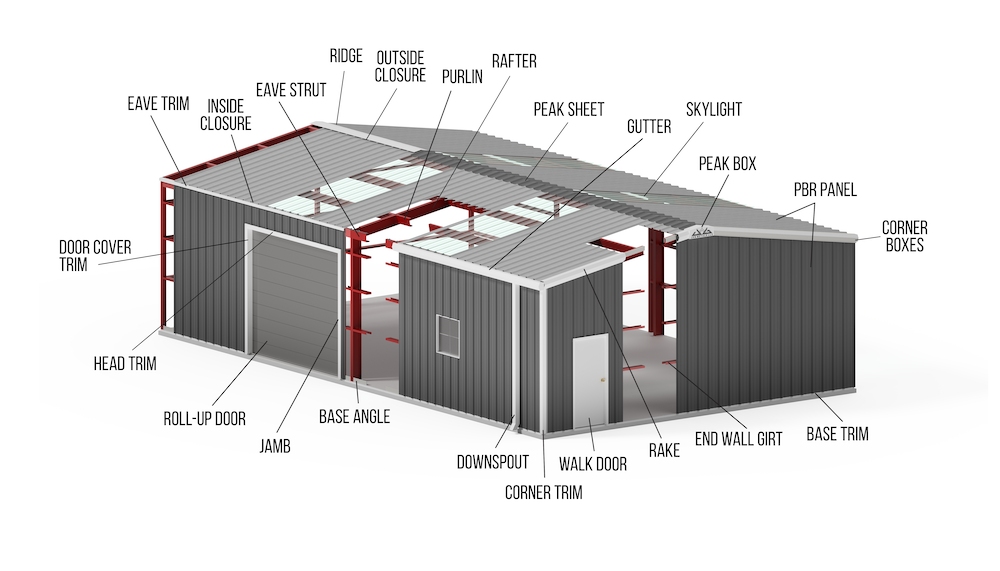 A pre-engineered building is a system utilizing three distinct product categories:
- Built-up “I” to shape primary structural framing members (columns and rafters)
- Cold-formed “Z” and “C” to shape secondary structural members (roof purlins, wall girts, and eave struts)
- Roll-formed sheeting profiles (roof and wall cladding).
Pre-engineered steel buildings are recently becoming popular since they perform better than conventional buildings in terms of cost-saving benefits and constructing speed.
PEB services typically include:
- Design & Engineering: Custom designs based on client requirements, including load-bearing calculations, structural analysis, and adherence to local building codes.
- Manufacturing: Fabrication of the components in a controlled factory environment, which can include structural steel, roofing, wall panels, and doors.
- Transportation: Delivery of the pre-fabricated components to the construction site, ready for assembly.
- Assembly & Erection: Skilled labor for the assembly and erection of the building, including the installation of the steel frame, roofing, and cladding.
- Maintenance & Upgrades: After construction, many service providers also offer maintenance and upgrade services to ensure the building remains functional and in good condition.
- Customization Options: Depending on the project needs, PEBs can be tailored with insulation, HVAC, electrical systems, and aesthetic finishes.